



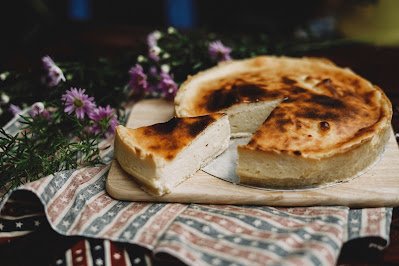
Cracked cheesecake almost always comes down to two things: overbaking and rapid temperature changes. This recipe uses a water bath and a slow oven-cool method to keep the top smooth and crack-free.
Ingredients
Makes one 9-inch cheesecake.
Crust:
- 1½ cups (150g) graham cracker crumbs
- ⅓ cup (75g) melted butter
- 2 tbsp sugar
Filling:
- 4 (8 oz) blocks cream cheese, softened — room temperature cream cheese is essential for a smooth, lump-free batter.
- 1 cup (200g) sugar
- 1 tsp vanilla extract
- 4 large eggs, room temperature
- ⅓ cup (80g) sour cream
Instructions
- Preheat oven to 325°F (165°C). Wrap the outside of a 9-inch springform pan tightly in foil to prevent water bath leakage.
- Make the crust: Mix graham cracker crumbs, melted butter, and sugar. Press firmly into the bottom of the pan. Bake for 8 minutes, then set aside to cool.
- Beat the cream cheese until completely smooth, 2–3 minutes, scraping down the bowl as needed.
- Add sugar and vanilla, beating until combined.
- Add eggs one at a time, mixing on low speed just until incorporated. Overbeating adds excess air, which causes cracking.
- Mix in the sour cream until just combined.
- Pour the filling over the crust. Place the springform pan inside a larger roasting pan and fill the outer pan with hot water halfway up the sides.
- Bake for 55–65 minutes, until the edges are set but the center still jiggles slightly when nudged.
- Turn off the oven and crack the door open. Let the cheesecake cool inside the oven for 1 hour — this gradual cooling is what prevents the surface from cracking.
- Refrigerate for at least 4 hours, ideally overnight, before removing from the pan and slicing.
Tips
- Use room-temperature ingredients. Cold cream cheese and eggs don’t blend smoothly and lead to lumps.
- Mix on low speed once the eggs go in. Overbeating incorporates air that expands and collapses, cracking the surface.
- Don’t skip the gradual oven cooling. Sudden temperature drops are the most common cause of cracks.
Common Mistakes
- Overbaking, leaving the cheesecake in until the center is fully set rather than slightly jiggly.
- Skipping the water bath, which leads to uneven baking and a higher risk of cracking.
- Removing the cheesecake straight from a hot oven to room temperature, causing rapid contraction of the surface.
Substitutions and Variations
- Crust swap: Use crushed Oreo or digestive biscuits instead of graham crackers.
- Fruit topping: Top with a fresh berry compote or fruit curd after chilling.
- Mini cheesecakes: Divide into a muffin tin lined with cupcake liners and reduce bake time to 18–20 minutes.
Storage
Refrigerate, covered, for up to 5 days. Freeze whole or in slices, wrapped tightly, for up to 2 months; thaw overnight in the fridge before serving.
Frequently Asked Questions
How do you keep cheesecake from cracking?
Use a water bath, avoid overmixing once the eggs are added, and let the cheesecake cool gradually in the turned-off oven instead of removing it suddenly.
Why is a water bath used for cheesecake?
It creates gentle, even heat around the pan, preventing the edges from overbaking before the center sets.
How do I know when cheesecake is done baking?
The edges should look set while the center still jiggles slightly when the pan is gently shaken — it will fully set as it cools.
